
Property Valuation Accuracy: BlueNest’s 96% Explained
Property valuation accuracy matters. See how BlueNest measures estimates against real sale prices to support smarter property decisions. Learn practical
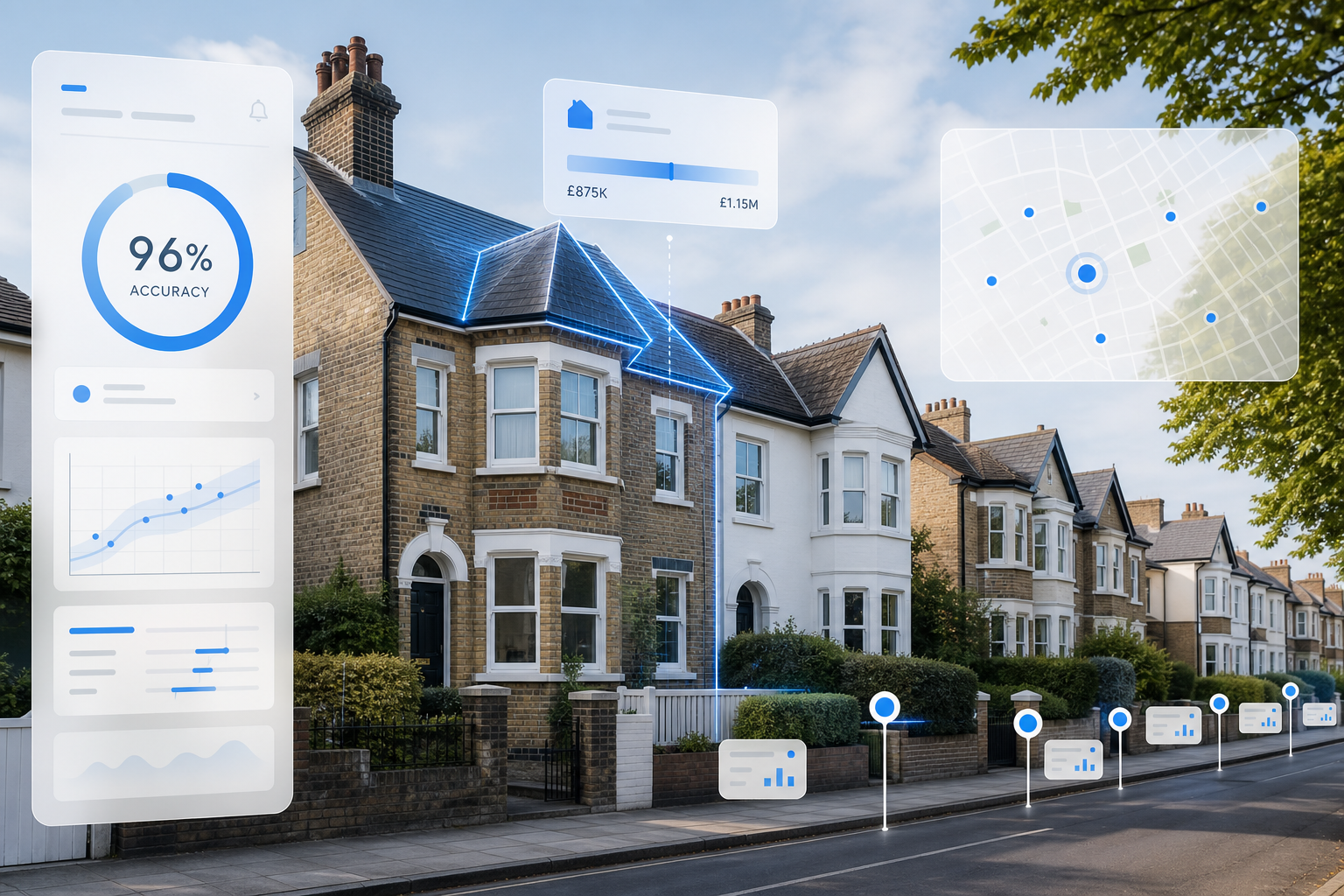
Why Property Valuation Accuracy Matters Before You Sell, Buy, or Invest
BlueNest measures property valuation accuracy against completed real sale prices, not asking prices, listing expectations, or subjective opinions. That distinction matters because a valuation is only useful if it helps you make a better decision in the real market.
For sellers, inaccurate property price estimates can mean launching too high, sitting unsold, then reducing later after buyer interest has cooled. They can also mean pricing too low and leaving money on the table. For buyers, poor home price prediction can lead to overpaying, losing negotiating power, or walking away from a fair deal because an estimate was misleading.
For investors, real estate valuation accuracy directly affects yield calculations, renovation budgets, refinancing assumptions, and exit strategy. A small percentage difference can become a large cash difference when multiplied across deposits, borrowing, tax, repairs, and resale timelines.
Estate agents and financially motivated homeowners face the same issue from another angle: unrealistic expectations. If a homeowner believes a property is worth £450,000 when likely real sale prices point closer to £420,000, the conversation becomes difficult before marketing even begins.
That is why BlueNest’s 96% property valuation accuracy claim should be treated as a measurable performance statement, not a vague marketing phrase. To interpret it properly, readers need to know:
- What sale data the estimate was tested against
- Whether accuracy means average percentage accuracy, median error, or another metric
- Which properties, locations, and time period were included
- Whether the result was based on completed real sale prices
- How often the model is refreshed and validated
In practical terms, the strength of any AI property valuation depends on whether it can predict what buyers actually pay, not simply what sellers hope to achieve.
What Property Valuation Accuracy Actually Means
Property valuation accuracy is the closeness of a predicted property value to the final market-clearing sale price. In plain English, if a model estimates that a home is worth £400,000 and it later sells for £408,000, the estimate was close. If it sells for £460,000, the estimate was much less accurate.
This is different from asking price accuracy. Asking prices are set before negotiation, buyer competition, survey results, mortgage approval, and final contract terms. They may be deliberately high to leave room for negotiation, low to attract multiple offers, or adjusted quickly if the market changes.
Property valuation accuracy can be reported in several ways:
| Accuracy measure | What it means | Simple example |
|---|---|---|
| Single point estimate | One predicted value | “This property is estimated at £400,000” |
| Value range | A likely lower and upper band | “Estimated between £385,000 and £415,000” |
| Confidence interval | A statistical range based on uncertainty | “High confidence between X and Y” |
| Median error rate | The middle error across many valuations | Half of errors are above, half below |
| Mean absolute percentage error | Average percentage difference from sale price | Average error of 4% |
| Tolerance-band accuracy | Share of estimates within a set margin | 90% of estimates within 5% of sale price |
This is why a headline such as “96% accurate” must always be tied to the exact metric behind it. Under a percentage-error interpretation, 96% accuracy could mean the estimate was, on average, 4% away from the final sale price. Under a tolerance-band method, it might mean 96% of estimates fell within a defined margin, such as within 10% of real sale prices.
Those are very different claims.
A reliable valuation provider should explain the methodology clearly enough for sellers, buyers, investors, and agents to understand what the number means before relying on it. Without that definition, “accuracy” can sound precise while remaining ambiguous.
Why Real Sale Prices Are the Best Benchmark for Home Price Prediction
Real sale prices are completed transaction prices where a buyer and seller agreed on a figure and the sale closed. They are the strongest benchmark for home price prediction because they show what the market actually accepted.
Asking prices do not provide the same evidence. A listing price can be aspirational, strategic, outdated, or influenced by the seller’s urgency. Some homes are priced high to test demand. Others are priced low to generate viewings and competing bids. Some never sell at all.
Real sale prices are more useful because they reflect the outcome after:
- Buyer demand has been tested
- Negotiation has taken place
- Financing and affordability have been considered
- Property condition has influenced the final decision
- Market timing has played out
- The transaction has completed
For AI property valuation, this creates a stronger validation loop. A model can be back-tested against completed sales to see whether its predictions matched real market outcomes. That back-testing can then reveal whether property valuation accuracy holds up across different locations, property types, price bands, and market conditions.
For example, a valuation model may perform well for standard three-bedroom houses in areas with many comparable sales, but less well for unusual rural homes, newly converted flats, luxury properties, or homes with significant condition issues. Testing against real sale prices helps expose those differences.
Local market dynamics matter too. Two similar homes can achieve different prices because of school catchments, transport links, street-by-street demand, parking, lease length, renovation quality, or the number of competing listings available at the same time.
That is why completed sale data is not just a historical record. It is the foundation for measuring whether a property price estimate is grounded in real buyer behaviour.
How BlueNest’s AI Property Valuation Model Produces Accurate Property Price Estimates
BlueNest’s AI property valuation model is designed to combine property-level data, comparable sales, and local market signals to produce data-driven property price estimates. The goal is not to replace every form of human judgement, but to provide a fast, evidence-based valuation grounded in market patterns.
At a high level, accurate property price estimates depend on several core inputs:
- Recent comparable sales near the property
- Property type, size, layout, and features
- Location and neighbourhood-level demand
- Historical price movements
- Current market trends
- Supply and demand conditions
- Seasonality and timing
- Similarity between the subject property and comparable homes
- Data freshness and completeness
Automated valuation models work by identifying patterns across large numbers of properties. If similar homes in a similar area have recently sold within a certain range, the model can use that evidence as a baseline. It can then adjust the prediction based on property characteristics and local context.
For instance, a larger home on the same street may command more than a smaller one, but only up to the level local buyers are willing to pay. A recently refurbished flat may outperform comparable unmodernised flats, while a property with a short lease or poor condition may need a discount. Local demand, mortgage conditions, and buyer competition can also influence final real sale prices.
Data quality is critical. A model is only as good as the information it learns from. That means valuation accuracy depends on:
- Removing duplicate, incomplete, or misleading records
- Prioritising relevant comparable sales
- Updating inputs as new sale evidence becomes available
- Detecting outliers that could distort predictions
- Validating estimates against completed transactions
- Monitoring performance across different market segments
This is where AI property valuation can be powerful. It can process far more data points than a person can manually review, while applying a consistent methodology. However, the best results still depend on reliable data coverage, thoughtful model design, and ongoing validation against real sale prices.
What 96% Property Valuation Accuracy Means in Practical Terms
BlueNest’s 96% property valuation accuracy should be interpreted only according to the defined metric used to calculate it. The figure is meaningful when readers understand whether it refers to average percentage accuracy, median absolute percentage error, or the percentage of valuations within a defined tolerance band.
A simple percentage-error example helps illustrate the idea.
Suppose BlueNest predicts a property value of £400,000. The home later sells for £416,000. The difference between the estimate and the real sale price is £16,000.
That means:
| Item | Amount |
|---|---|
| Predicted value | £400,000 |
| Real sale price | £416,000 |
| Difference | £16,000 |
| Percentage error | 4% |
| Percentage accuracy interpretation | 96% |
Under this interpretation, a 4% error equates to 96% accuracy. However, this example should only be used as an illustration unless it matches BlueNest’s confirmed methodology exactly.
Even strong home price prediction will not match every final sale price perfectly. Property transactions include human behaviour and negotiation. A home might sell above prediction because several buyers compete at once. It might sell below prediction because the seller needs a quick sale, a survey reveals issues, mortgage finance falls through, or the property is marketed poorly.
Other factors that can create variance include:
- Last-minute negotiation
- Buyer urgency
- Seller motivation
- Chain pressure
- Renovation quality
- Hidden defects
- Local supply levels
- Interest rate changes
- Timing within the selling season
For homeowners, the practical takeaway is that an accurate valuation should support better pricing decisions, not promise a guaranteed sale price. A 96% accuracy claim is most useful when combined with a transparent explanation of the metric, the data behind it, and the likely confidence range for the specific property.
How BlueNest Compares With Appraisals, Agent Valuations, and Online Home Value Estimators
BlueNest’s AI property valuation sits within a wider valuation landscape that includes formal appraisals, estate agent valuations, and online home value estimators. Each approach has strengths, limitations, and use cases.
| Valuation approach | Strengths | Limitations | Best used for |
|---|---|---|---|
| AI property valuation | Fast, scalable, data-driven, consistent | May not fully capture unseen condition or unique features | Early pricing insight, market research, decision support |
| Formal appraisal | Detailed, inspection-based, often lender-recognised | Slower, more expensive, may be point-in-time | Mortgage lending, legal, tax, or formal valuation needs |
| Estate agent valuation | Local selling knowledge, buyer feedback, strategy | Can be influenced by listing goals or incentives | Setting asking price and marketing strategy |
| Online home value estimator | Quick and accessible | Accuracy varies widely by data and model quality | Rough initial estimate |
Formal appraisals may include a physical inspection, condition-specific judgement, and lender requirements. They can be important where a regulated or legally recognised value is needed.
Estate agents add another type of insight. A good agent understands buyer behaviour, local demand, competing listings, and presentation strategy. However, agent valuations can vary. One agent may suggest a higher asking price to win the instruction, while another may recommend a lower price to encourage a faster sale.
Online property valuations differ because platforms use different data sources, model designs, update schedules, comparable sale selection rules, and confidence thresholds. Two tools can produce different estimates for the same home because they are not looking at the same evidence in the same way.
BlueNest’s value proposition is strongest when its AI property valuation is judged by transparent validation against real sale prices. For sellers, buyers, investors, and agents, the question is not simply “Which estimate is highest?” It is “Which estimate is most consistently aligned with completed market outcomes?”
Factors That Can Make Any Property Valuation More or Less Accurate
Even a strong AI property valuation model is still working in the real world, where properties are unique, records can be incomplete, and local markets move quickly.
That is why property valuation accuracy should never be judged by a single number alone. The best estimate depends on the quality of the data, the similarity of recent comparable sales, the condition of the home, and what buyers are willing to pay at the time the property reaches the market.
BlueNest’s 96% accuracy against real sale prices is designed to give sellers, buyers, investors, and agents a highly reliable pricing benchmark. But like any valuation method, it becomes more accurate when the property details are complete and up to date.
If a homeowner has recently renovated, extended, upgraded, or changed the property, those details can materially affect the estimate. The more accurate the submitted property information is, the more accurately an AI property valuation can reflect the home’s current market position.
Property-Specific Factors That Affect Valuation Accuracy
Some homes are easier to value than others.
A standard three-bedroom house in a neighbourhood with many similar recent sales usually has a strong pool of comparable evidence. A one-of-a-kind home, a heavily altered property, or a building with unusual features may be harder to estimate precisely.
Common property-specific factors include:
- Renovations and refurbishments: A newly renovated kitchen, bathroom, roof, heating system, or full interior upgrade may increase value, especially if public records have not captured the improvement.
- Extensions and conversions: Added living space, loft conversions, garage conversions, and rear extensions can change the property’s value significantly.
- Poor condition: Damp, structural issues, dated interiors, roof problems, or major repair needs can reduce achievable sale price.
- Unrecorded upgrades: Solar panels, insulation, smart home systems, garden offices, or premium fixtures may not appear in standard datasets.
- Unusual layouts: Awkward floorplans, small bedrooms, limited natural light, or poor room flow can affect buyer demand even if the square footage looks competitive.
- Heritage or period features: Original fireplaces, high ceilings, listed status, architectural character, or conservation-area appeal can increase value, but may also bring restrictions or maintenance costs.
- Non-standard construction: Timber-framed, concrete, modular, thatched, or other non-traditional builds can be harder to finance, insure, and compare with nearby homes.
This is where user-submitted details matter. If an owner confirms that a home has been modernised, extended, or is in poor condition, the estimate can be adjusted around the property as it exists today rather than how it appears in older records.
For example, two houses on the same street may look identical in public data. But if one has a new extension and high-spec renovation while the other needs major repairs, their real sale prices could differ substantially. A valuation model is strongest when it can see those differences.
Market-Data Factors That Influence Property Price Estimates
Real estate valuation accuracy depends heavily on comparable sales.
A comparable sale is a recently sold property that is similar in location, size, type, condition, and appeal. The more relevant comparable sales available, the more confidently a model can estimate current value.
Accuracy can be affected when there are:
- Few recent comparable sales: Some neighbourhoods have low turnover, making it harder to benchmark current value.
- Rural or low-transaction areas: Large plots, unique homes, and wide property variation can reduce the number of useful comparisons.
- Stale records: If the latest sale evidence is months or years old, it may not reflect today’s buyer demand.
- Incomplete property attributes: Missing floor area, bedroom count, plot size, tenure, parking, or condition data can affect pricing precision.
- Inconsistent public data: Public records can vary in quality, especially where property changes were not updated promptly.
- Different micro-markets: Two homes may be close geographically but sit in different school catchments, commuter zones, flood-risk areas, or demand pockets.
This is why neighbourhood-level modelling matters. A broad regional trend is useful, but buyers make decisions at a much more local level. One side of a main road may sell differently from the other. A property near transport, parks, schools, or popular amenities may command a premium that is not obvious from postcode-level averages alone.
A good valuation process does not simply ask, “What are homes in this town worth?” It asks, “What have the most comparable homes nearby actually sold for, and how does this specific property differ from them?”
Market-Timing Factors That Can Move Real Sale Prices
Property values are not static. A home valued accurately today may need a revised estimate if the market changes quickly.
Market timing can affect property valuation accuracy when there are:
- Fast-rising prices: In a hot market, older comparable sales may understate what buyers are now prepared to pay.
- Falling prices: In a cooling market, past sale prices may be too optimistic.
- Interest rate changes: Higher borrowing costs can reduce affordability and buyer budgets, while lower rates can increase demand.
- Local supply shocks: A sudden increase in similar listings can create competition and push asking prices down.
- Seasonal demand: Some areas see stronger buyer activity in spring or early summer, while others are more consistent year-round.
- Changing buyer sentiment: Economic uncertainty, employment shifts, school admission cycles, and lifestyle trends can all influence demand.
This is one reason real sale prices are such a valuable benchmark. Asking prices show what sellers hope to achieve. Real sale prices show what buyers actually paid.
However, even real sale data has timing limits. Completed sale records often reflect offers accepted weeks or months earlier. In a fast-moving market, valuation models need to interpret not only historic sale prices but also current conditions, listing activity, and demand signals.
How to Improve the Accuracy of Your Valuation
Whether you use an AI property valuation, an agent opinion, or a formal appraisal, you can improve the reliability of the result by providing better information.
Before requesting a property price estimate, prepare:
- Accurate bedroom and bathroom count
- Current floor area, if known
- Details of extensions, conversions, or major works
- Renovation dates and upgrade quality
- Parking, garden, balcony, or outdoor space details
- Leasehold, freehold, or tenure information
- Service charges, ground rent, or restrictions where relevant
- Known defects or condition issues
- Photos or descriptions that reflect the current state of the property
- Any unique features that make the home more or less desirable
For sellers, this helps set a realistic asking price and avoid overpricing. For buyers, it helps judge whether an offer is sensible. For investors, it supports yield calculations, refurbishment planning, and resale assumptions.
The practical takeaway is simple: no valuation method is perfect in every situation, but the best models become much more useful when they combine real sale prices, local market evidence, current property details, and clear assumptions.
FAQ
What is the most accurate property valuation?
The most accurate property valuation is usually one that combines recent real sale prices, highly relevant comparable properties, accurate property details, and current local market conditions.
A formal appraisal may be required for lending or legal purposes, while an AI property valuation can provide a fast, data-led estimate. For pricing decisions, the strongest approach is often to compare multiple sources and focus on evidence from real sale prices rather than asking prices alone.
Are online property valuations accurate?
Online property valuations can be accurate when they are based on reliable data, recent comparable sales, and detailed property attributes. Their accuracy is strongest for standard properties in active markets with plenty of recent sales evidence.
They may be less reliable for unusual homes, recently renovated properties, rural locations, or areas with limited transaction data. Submitting accurate property details can improve the quality of the estimate.
Do appraisals usually match the asking price?
Not always. An asking price is the seller’s target, while an appraisal or valuation is an evidence-based opinion of market value.
If a property is priced realistically, the appraisal may be close to the asking price. If the seller has overestimated demand, ignored condition issues, or priced above comparable sales, the appraisal may come in lower. In competitive markets, a property may also sell above valuation if buyers are willing to pay a premium.
What happens if a property valuation is lower than the offer?
If a valuation is lower than the offer, it can affect negotiations, mortgage lending, and buyer confidence.
For buyers using finance, the lender may base borrowing on the lower valuation rather than the agreed offer price. This can mean the buyer needs a larger deposit, renegotiates the price, or withdraws from the purchase. For cash buyers, a lower valuation may still prompt a reassessment of whether the property is worth the agreed amount.
Why do different property valuation tools give different estimates?
Different tools use different data sources, modelling methods, update frequencies, comparable sales, and assumptions. Some may rely more heavily on historic sale prices, while others may factor in local market trends, property attributes, or user-submitted information.
Small differences are normal. Larger differences often occur when a property has unusual features, incomplete records, recent renovations, or limited comparable sales nearby.
Can I rely on an AI property valuation when selling, buying, or investing?
Yes, an AI property valuation can be a valuable decision-making tool, especially when it is benchmarked against real sale prices and supported by strong local data.
For sellers, it can help set a realistic price range. For buyers, it can test whether an asking price or offer is reasonable. For investors, it can support acquisition analysis and resale planning.
The best use is not to treat any single estimate as absolute. Use it as a strong pricing benchmark, then consider condition, timing, comparable sales, and your specific financial goals before making a final decision.